
Proactive Neuro-Rights
An AFT Contribution

Technoprogressive Policy Project
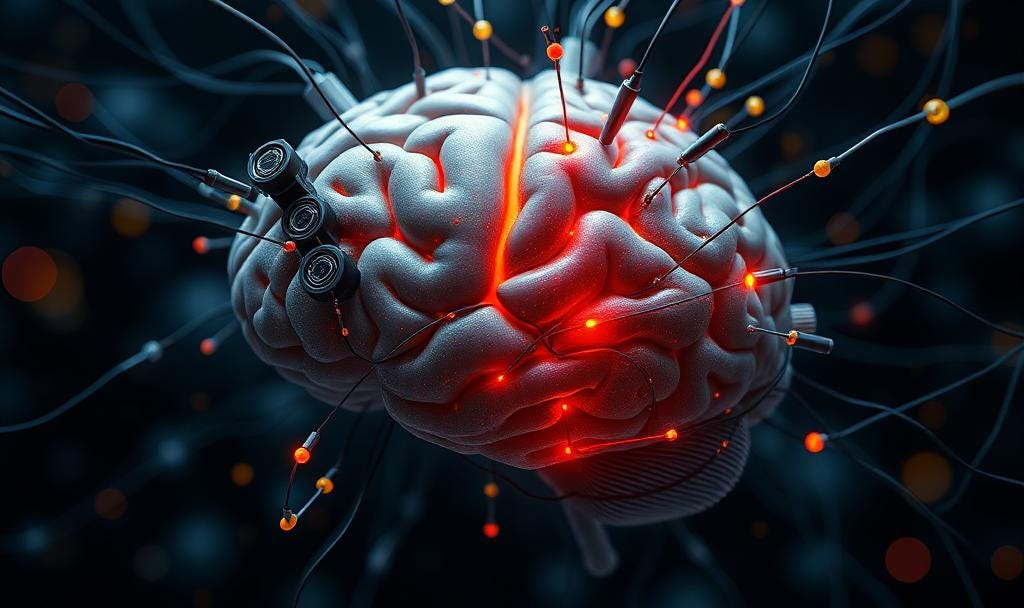
In recent years, a large variety of researchers and institutions have taken up the question or neuro-rights. The speed of development of technologies that are now able to profoundly and rapidly influence human thought, or to collect intimate information on the content or functioning of our thoughts as well as our decisions (medicinal compounds, external devices, implants, BCI devices, etc.) make this problem urgent.
The first lawsuits between individuals and technology companies in the name of defending mental privacy have already taken place. For example, in Chile, the company Emotiv, a manufacturer of a brainwave analysis device, was sued under the Law on the Protection of Private Life (Law 19.628), for challenging the right to mental integrity, and unauthorized surveillance. (See: Hunter T. Carter, “Neural Rights: Landmark Ruling”, October 18, 2023).
The purpose of the current proposal is not to add a page to the passive defense of citizens whose neurological data are being abused by malicious companies plundering them. The objective here is to outline a series of reforms necessary to enable citizens to assert a proactive right to use available neuroscience and neurotechnologies, in a secure framework, for their own benefit.
Here are five concrete examples of why progressive administrations should change the law.
Developing the law in favor of autonomous choices for mental betterment
Medical oversight of consumer EEG/TMS technologies
The legislator must establish medical oversight for the use of EEG sensors and Transcranial Magnetic Stimulation (TMS) transmitters for the general public.
This is a pragmatic approach to the democratization of these technologies. EEG devices like Muse or home TMS devices are increasing in number, but their unsupervised use can pose risks. The justice system cannot simply intervene after the fact (as in the Chilean case already cited). Above all, medical supervision would make it possible to validate the effectiveness of protocols, minimize risks (convulsions, adverse cognitive effects) but also to personalize uses according to neurophysiological profiles.
Microdosing Psychedelics
Develop medical support networks for the use of psychotropic substances in micro-dosing (Psilocybin, LSD, etc)
This approach is experiencing a major resurgence of scientific interest. Preliminary studies on microdoses of psilocybin and LSD suggest potential benefits, for example, for creativity and cognitive flexibility. Other therapeutic effects include reducing anxiety and depression, and improving mood and motivation.
But, at this stage, these use cases are only practiced in distinct settings: either in the clinical context (for example in a psychiatric hospital), or in a recreational manner, organized and supervised in paramedical environments, or in the jungle of direct sales via the internet or on illegal black markets.
The issue of accessibility remains complex, requiring appropriate regulatory frameworks, with the objectives being for the first two worlds to meet, and among others to reabsorb the third.
Nootropic substances under medical supervision
Medical supervision of the use of compounds to aid concentration and alertness (Modafinil, Ritalin, etc.)
Modafinil and Ritalin, drugs first developed for therapeutic purposes, are already being used off label for cognitive enhancement, for example by students (but also by doctors for their personal use! (See for example:Franke et al. (2013), "Use of illicit and prescription drugs for cognitive or mood enhancement among surgeons," in BMC Medicine. A responsible medical framework would allow for an individualized benefit/risk assessment. It should lead to long-term monitoring of effects and enable the prevention of abuse and addiction.
Research on treatments for behavioral excesses
Continuation of research with a view to expanding the use of compounds useful in the treatment of behavioral excesses such as anger, violence, psychological or sexual predation (indications relating to these drugs).
Beyond current treatments (antipsychotics, mood stabilizers), research is exploring specific serotonergic modulators, oxytocin receptor antagonists, or even interventions targeting the amygdala and prefrontal cortex. These research efforts, whose societal impacts could ultimately be very significant, must be encouraged.
Opening up research on cognitive genetic engineering
This is the most prospective and ethically complex field. Current research focuses in particular on genes considered to be linked to intelligence (COMT, CACNA1C), the epigenetic mechanisms of synaptic plasticity, and gene therapies for pathological cognitive deficits.
However, whether in France (where the legal framework is much more restrictive) or in the United States (where it is more liberal), it remains problematic that any prospect of genetic cognitive enhancement is seen as a taboo. This preconception significantly hinders any funding. Officially admitting that genetic cognitive enhancement will one day be possible is an essential step.
Cross-cutting ethical issues
The necessary safety conditions for the development of this research and new possibilities are already largely addressed by existing laws, but the above proposals also imply a set of regulations aimed at guaranteeing justice in their accessibility and in the autonomy of their choice.
Public scientific research bolstered
In these complex and controversial areas where the financial interests at stake are considerable, public authorities must develop research, on the one hand with scientists of different backgrounds and opinions, and on the other hand by ensuring complete, comprehensible and free publication (for people referencing the information) of all results which do not pose significant risks for citizens.
Equity of access and distributive justice
It is firstly the public authorities that will guarantee equitable access to cognitive technologies. This implies ethical regulation, public or redistributive funding, and integration into public services, particularly hospitals. Such development requires the highest transparency, democratic control, and regular assessments of the relevance of the deployed technologies. It is up to governments to intervene to avoid a social divide and strengthen equal opportunities within a framework that respects personal freedoms.
Informed consent and autonomy
Enabling sufficiently equal access to these technologies is not enough. We must ensure that informed consent is possible in the face of social and economic pressures. This requires clear information, the establishment of reflection periods, the possibility of withdrawal, and unbiased, non-coercive guidance. Above all, it will be necessary to prohibit any conditionality of access to employment or services linked to these technologies. To this end, ensuring neutral financial support, protecting data confidentiality, and overseeing practices through regular checks will be essential. Particular attention must be paid to vulnerable populations. Finally, it would be desirable to develop civic education on these issues from secondary school onwards, in order to strengthen autonomy and collective vigilance.
Long-term societal effects
Such progress could have considerable effects on social structures. If we are to be able to envisage them, we must anticipate the overall effects of these cognitive technologies. Various tools can be developed to achieve this, such as the elaboration of prospective scenarios, the establishment of independent evaluation bodies, longitudinal monitoring, and socio-economic simulations. It would also be good to ensure international monitoring, ongoing public debate, alert mechanisms, and the integration of these issues into social policies. Independent critical research must be supported, and a collective memory organized to inform future choices. Independently of other policies that work to ensure justice, equality, and the development of each individual, it is also through this type of approach that we will enable progressive democratic adaptation in the face of uncertainties and long-term, potentially considerable transformations that would bring widespread mental betterment of the population.
The French Transhumanist Association: Technoprogressive, also known as AFT Technoprog!, advocates for the use of science and technology to enhance human physical and mental capabilities.
 | A guest post by
|